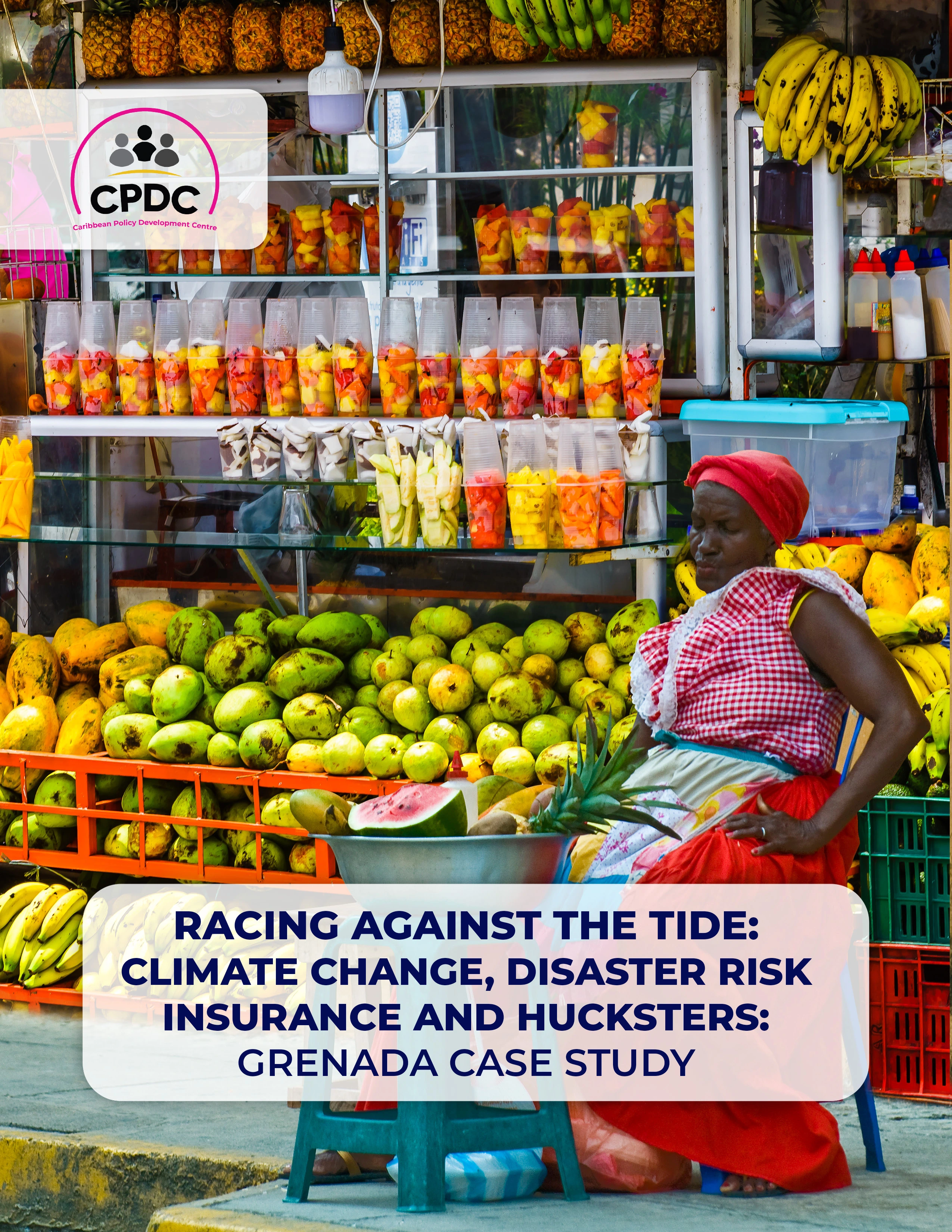
As climate risks intensify across the Caribbean, traditional informal trade networks face unprecedented vulnerabilities. In Grenada, small-scale, predominantly female traders known as hucksters play a vital role in food security and regional trade. However, they remain highly exposed to extreme weather events, natural hazards, and supply chain disruptions without adequate financial safety nets. To address this gap, the Caribbean Policy Development Centre (CPDC) conducted a study titled "Racing Against the Tide: Climate Change, Disaster Risk Insurance and Hucksters – Grenada Case Study" to assess how Climate and Disaster Risk Finance and Insurance (CDRFI) mechanisms can be tailored to build resilience for these essential service providers.
The study examines the demographic, socio-economic, and operational landscapes of hucksters in Grenada, revealing that while most traders exhibit strong basic financial capabilities, awareness and uptake of CDRFI instruments remain exceedingly low due to informational and structural barriers. Despite severe losses at sea and supply disruptions caused by hurricanes, floods, and droughts, the vast majority of hucksters operate without insurance coverage or access to formal credit lines.