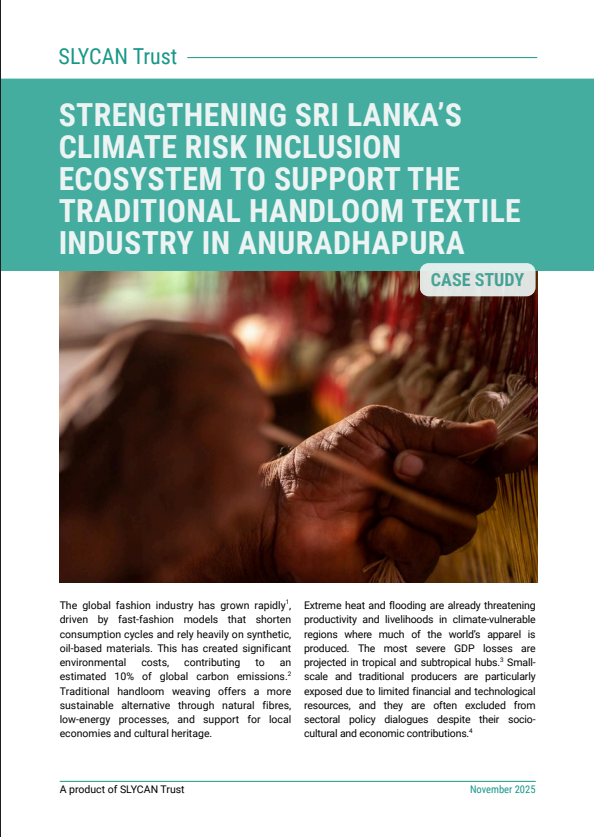
Sri Lanka’s traditional handloom industry plays a vital role in sustaining rural livelihoods, empowering women, and preserving cultural heritage. Yet, rising temperatures, shifting rainfall patterns, and increasing climate variability pose growing risks to productivity, health, and income security for weavers– particularly in vulnerable districts such as Anuradhapura.
This case study examines how extreme heat, inadequate workplace infrastructure, evolving weather patterns, and limited social protection mechanisms affect small-scale and traditional handloom weavers in the Ipalogama and Galenbidunuwewa Divisional Secretariat Divisions. Drawing on field insights, community perspectives, and climate risk assessments, the study highlights the urgent need to strengthen Sri Lanka’s climate and disaster risk finance and insurance (CDRFI) ecosystem to better safeguard artisanal workers.
By identifying key vulnerabilities, analysing institutional gaps, and outlining actionable entry points– from microinsurance solutions to heat adaptation measures– this study contributes to ongoing efforts to build climate-resilient traditional industries and enhance inclusive economic development across Sri Lanka.