

Kusum Lata is a professional in the field of climate change working on policies, strategies, capacity building. Presently, she is a well-known expert on economic diversification and just transition of the workforce while she leads the support to international negotiations on the impact of the mitigation policies. She has written technical papers for international negotiations, research papers in reputed journals and chapters in books in the area of her progressive career. She spent the first fifteen years of her career working in India on developing technology for bio-methanation (waste to energy) and biomass gasification and shares two patents through her research. She completed her doctorate in the field of waste to energy and published many research papers in reputed journals for her doctoral degree research work. Later, she also established herself as qualified technical lead assessor and undertook more than fifty audits in the duration of five years with UNFCCC for accrediting organizations for validating and verifying carbon emission reduction projects. She enjoys working on projects which directly impact the life of people especially in developing countries, which inspired her to work over six months in Togo, Africa to support development and implementation of projects like efficient cook stoves, waste management etc.

Christoph Schwarte is a qualified German lawyer with over 20 years of practical experience in different arenas of international environmental law. He is the executive director of Legal Response International (LRI) - a London based charity that provides free legal support to developing countries and civil society observer organisations in connection with the international climate negotiations. Christoph was a member of the International Law Association’s Committee that developed legal principles related to climate change (adopted in 2014) and has been actively involved in the international climate negotiation for many years. He has co-authored a guide book on the Paris Agreement and regularly advises on climate law. Previously, Christoph served with the International Tribunal for the Law of the Sea (ITLOS) as an Associate Officer (P-2) and worked at the Foundation for International Environmental Law and Development (FIELD).

Dr Moustapha Kamal Gueye is Coordinator, Green Jobs Programme, at the International Labour Organization. Previously, he served as Head, Green Economy Advisory Services at the United Nations Environment Programme and as a Senior Programme Manager at the International Centre for Trade and Sustainable Development in Geneva. Earlier, he spent twelve years across Asia working at the Institute for Global Environmental Strategies in Japan. He currently serves in the Steering Group of the Green Economy Coalition and the Advisory Committee of GEO for Business. Kamal holds a Ph.D. from Nagoya University, Japan; DEA and LL.M from Dakar University; and Executive Certificates from the World Bank Institute; Columbia University; Foundation for Advanced Studies on International Development, Japan; and Integrated Research and Action for Development, India.
Sri Lanka was hit by Cyclonic Storm Ditwah in late November 2025, the country’s deadliest weather-related disaster since the 2004 Indian Ocean tsunami. Made more likely and intense due to climate change, the cyclonic storm had devastating impacts on Sri Lanka, with over 2 million people affected, almost 650 fatalities, around 200 still missing, and billions of USD in losses and damages to infrastructure, property, agricultural land, and livelihoods.
These impacts highlight the urgent need for Sri Lanka as a climate-vulnerable developing country to strengthen climate disaster risk financing systems and access funding for relief, recovery, reconstruction, and long-term resilience-building. Climate-induced extreme events like Cyclonic Storm Ditwah underscore the disproportionate burden faced by vulnerable nations that have contributed minimally to global greenhouse gas emissions yet bear the brunt of climate impacts.
Situated at the intersection of adaptation, mitigation, and development, addressing loss and damage requires an enhanced understanding of institutional readiness, available funding mechanisms, and strategic pathways for accessing tools and support, in order to complement and strengthen existing disaster response plans and frameworks. This includes building knowledge of key mechanisms and instruments such as the Fund for Responding to Loss and Damage (FRLD), the Santiago Network for Loss and Damage (SNLD), as well as relevant multilateral and bilateral processes and frameworks, alongside strengthened coordination across government institutions and non-state actors to enable access to technical expertise for effective access and deployment of risk financing instruments to strengthen climate resilience.
9:30 - 10:00
September 30, 2025
Join us for coffee and pastries to start the day.
10:00 - 10:45
September 30, 2025
Opening session including expert keynotes on thematic areas.
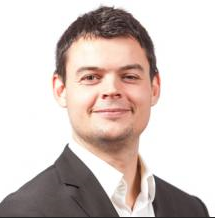
Thomas Roslyng Olesen
Head of MRA

Dennis Mombauer
Director – Research, SLYCAN Trust
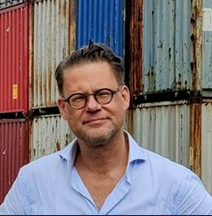
Christian Bueger
Professor, University of Copenhagen
10:45 - 12:00
September 30, 2025

Michele Acciaro
Associate Professor, CBS

Hugo Schally
Lead, EU Programme, SLYCAN Trust
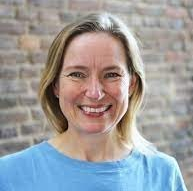
Mary Wisz
DTU Aqua
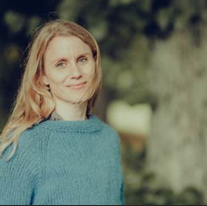
Janne Fritt-Rasmussen
Aarhus University
Christian Bueger
Professor, University of Copenhagen

Vositha Wijenayake
Director, Global Negotiations Support
Izabela Surwillo
Senior Researcher, DIIS

H. Elliott & R. T. Poulsen
Assistant & Associate Professor, CBS

Annette Skovsted Hansen
Associate professor, Aarhus University
12:00 - 12:30
September 30, 2025
Groups will share key insights and takeaways from the morning's discussions.
12:30 - 13:30
September 30, 2025
Enjoy a catered lunch and network with fellow attendees.
13:30 - 14:30
September 30, 2025
Groups will collaborate on developing project ideas on the following topics: Biodiversity, maritime ecosystems, and shipping; Maritime security; and Decarbonization and shipping.
14:30 - 14:45
September 30, 2025
A short break to refresh and recharge.
14:45 - 15:15
September 30, 2025
Groups report back on project development discussions.
15:15 - 16:00
September 30, 2025
Exploring connections between biodiversity, climate change (decarbonization) and maritime security.
Vositha Wijenayake
Director, Global Negotiations Support
16:00 - 16:10
September 30, 2025
Thank you and final announcements.
