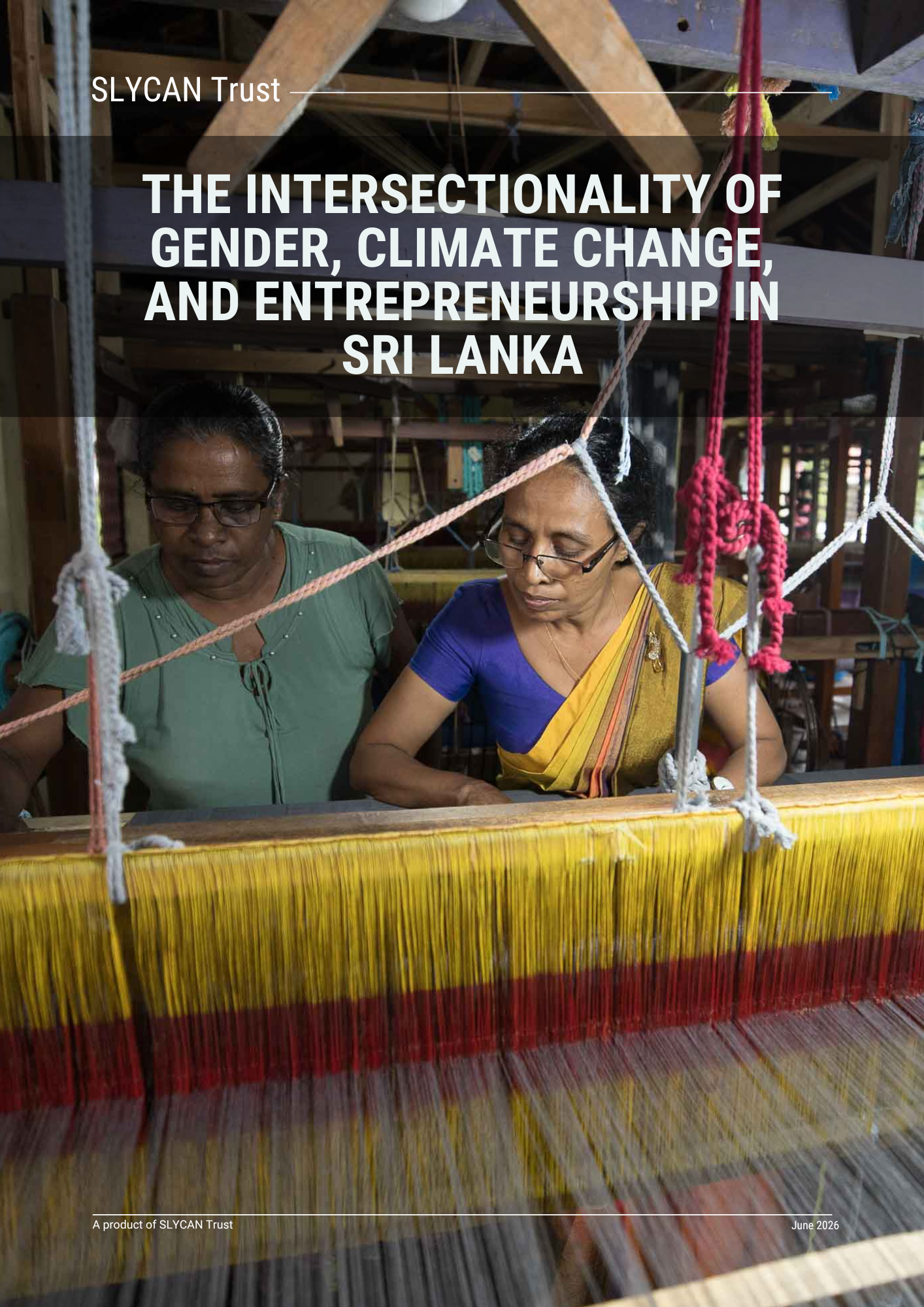
Sri Lanka is living with the disproportionate consequences of climate change, and the social signals are increasingly difficult to ignore. Intensifying impacts across key sectors of the economy are falling hardest on populations with existing vulnerabilities, with women facing heightened exposure to health burdens, income insecurity, and constrained access to resources and decision-making. Against this backdrop, entrepreneurship has emerged as a pathway to strengthen resilience and diversify livelihoods; however, women's participation remains shaped by structural constraints, gender norms, and unequal access to finance, assets, and markets, all of which are further exacerbated by climate risks. This reality is best understood not as an incidental gap but as a challenge that requires targeted, locally grounded responses anchored in global policy commitments.
This publication, developed under developed under a project funded by the German Federal Ministry for Economic Cooperation and Development (BMZ) and implemented through SLYCAN Trust's Multi-Actor Partnership (MAP) on Climate and Disaster Risk Management and Finance, examines the intersection of climate vulnerability, gender inequality, and entrepreneurship in Sri Lanka, and what is required to translate global commitments into local action. Sri Lanka's efforts in this area are linked to the UNFCCC Gender Action Plan, which emphasises gender-responsive climate action, access to finance, and women's leadership, yet translating these commitments into accessible and locally relevant entrepreneurship pathways remains a central implementation challenge. Gaps in financing, institutional support, and gender-sensitive policy design leave women entrepreneurs acutely exposed to climate risks, limiting the effectiveness of existing interventions. The publication assesses what stronger alignment between climate policy, gender equity, and entrepreneurship support would require in the Sri Lankan context.